GCSE English Essay Writing: Structure, Quotations and Exam Tips
GCSE English essays reward clear structure and well-chosen evidence more than long quotations. Whether your board is AQA, Edexcel or OCR, the same core skills earn marks: answer the question, organise your points, and support every point with a short quotation and analysis.
A structure that works in the exam
- Introduction: answer the question directly in two or three sentences. Say what you will argue, not just what the text is about.
- Main paragraphs: use Point, Evidence, Explain. Make a clear point, add a short quotation, then explain what the quotation shows and how the writer creates that effect.
- Conclusion: sum up your argument and link back to the exact words of the question.
Choosing quotations
Pick short quotations you can analyse word by word. A quotation with a strong verb, image or contrast gives you more to say than a long famous line. Learn a small set of quotations per text and practise using each one for different questions, rather than memorising long passages.
Analysing language
Name the technique only when you can explain its effect: what does this metaphor make the reader feel or understand? Link every comment back to the question. Examiners reward analysis of effects, not lists of techniques.
Timing and planning
Spend a few minutes planning before you write: note three or four points and the quotation for each. In the exam, a short plan keeps your essay focused and stops you repeating yourself. Leave time at the end to check spelling, punctuation and paragraphing, which carry marks in English Language.
Practise with our essay guides
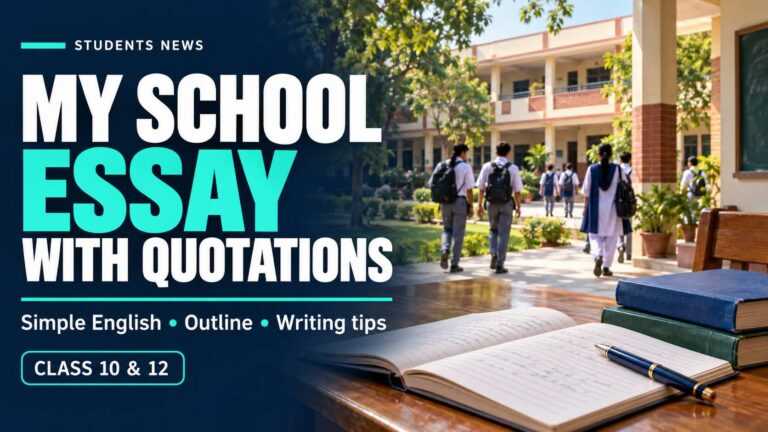
Our essay pages show quotations used inside full essays, which is a useful model for GCSE writing too — for example, see how quotations support each paragraph in our A Rainy Day essay with quotations and Daffodils summary with quotations. Always check your own board’s specification for the exact paper structure and assessment objectives.
What a strong paragraph looks like
A strong paragraph does four things. It opens with a clear point that answers the question. It supports the point with a short quotation. It zooms in on one or two words or images in that quotation and explains their effect. It ends by linking back to the question. For example, instead of writing “the writer uses a metaphor”, write what the metaphor suggests, what it makes the reader feel, and why that matters for the question you were asked. That final link is where many students gain or lose marks.
Writing about poetry
For poetry, comment on images, sound and structure as well as meaning. Short quotations work best: a single image or phrase you can unpack. Mention how the poem’s form or line breaks support its meaning only when you can explain the effect. Compare poems by idea first and technique second, so your comparison answers the question instead of listing similarities.
Writing about prose and plays
For novels and plays, track how a character or theme develops across the text. Choose quotations from different moments to show change, and comment on what the writer wants the audience to think or feel at each stage. In plays, stage directions and dialogue both count as evidence.
Common mistakes that lose marks
- Retelling the story instead of analysing it.
- Using long quotations with no comment.
- Naming techniques without explaining effects.
- Writing about the writer’s life when the question asks about the text.
- Forgetting to answer the exact question in the conclusion.
- Running out of time because there was no plan.
A simple revision plan
In the weeks before the exam, build a quotation bank for each text: five or six short quotations, each with one sentence on its effect. Practise planning answers to past-paper questions in five minutes, then write one full paragraph against the clock. Mark your own work against the mark scheme’s language: are you analysing, or only describing? Short, regular practice beats one long session the night before.
Frequently asked questions
How many quotations should I use in a GCSE essay?
Quality matters more than quantity. One well-analysed quotation per paragraph is usually enough; two short ones can help if you compare them.
How long should a GCSE English essay be?
There is no fixed word count. Examiners reward focused analysis, so a shorter essay that answers the question well beats a long, unfocused one.
Should I memorise whole essays?
No. Memorise quotations and flexible points you can adapt. A memorised essay rarely fits the exact question and can lose marks.
What if I run out of time?
Finish the paragraph you are on, then write a one-sentence conclusion that answers the question. A clear ending is worth more than extra unfinished points.
Answering unseen poetry and extract questions
Unseen questions test the same skills without revision of the text. Read the extract twice: once for meaning, once for language. Underline two or three short phrases you can analyse, decide on a clear point about the writer’s purpose or effect, and build your paragraphs around those phrases. For extract questions on a studied text, answer about the extract first and then widen to the whole text, as the question directs.
Improving your vocabulary for analysis
Examiners reward precise vocabulary. Instead of writing that a word is “good” or “effective”, say what it suggests, implies or emphasises, and name the feeling it creates. Build a small bank of analytical phrases — “this suggests”, “the writer presents”, “this creates a sense of” — and practise using them in timed paragraphs. Precise language makes your analysis sound confident and helps you explain effects clearly.
The night before and the exam room
The night before, skim your quotation bank and your plans for likely topics rather than writing full essays. In the exam, read every question twice, choose the one you can answer with the strongest evidence, and spend the first minutes planning. Keep an eye on the clock so every question gets its share of time, and reserve the final minutes for checking spelling, punctuation and paragraphing.
Final tips
Keep every answer focused on the question in front of you. A clear plan, short quotations and careful explanation will usually serve you better than long, memorised material. If you are unsure where to begin, start with a simple point, support it with evidence, and explain its effect. That steady approach helps you stay calm, use your time well and show the examiner exactly what you understand.