

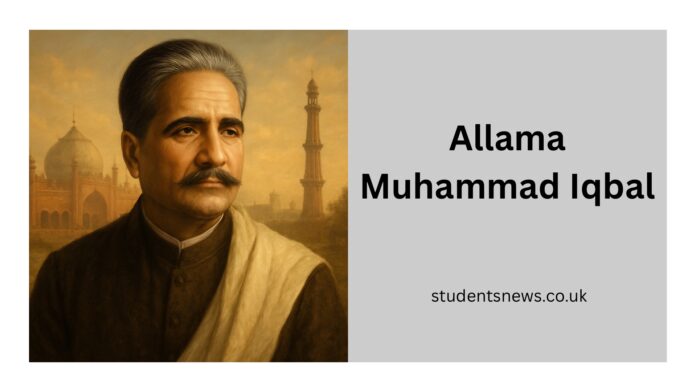
Allama Muhammad iqbal
Allama Muhammad Iqbal was a great poet, philosopher, and visionary leader of the Muslim world. His poetry awakened the spirit of self-respect, unity, and freedom among Muslims of the subcontinent. Known as the “Poet of the East,” Iqbal inspired millions through his powerful message of Khudi (selfhood) and determination. His ideas played a vital role in the creation of Pakistan. In this article, we will provide you a sample essay on “Allama Muhammad Iqbal” with the use of quotations.
If you want to read more essay, check out our Page where we have listed many essay.
Quotations of the essay of Allama Muhammad Iqbal
Here are the 10 Quotations Used in Essay Allama iqbal
-
“Raise yourself to such heights, that even before destiny takes its course, God Himself will inquire, ‘What is it that you desire?’” – Allama Iqbal
-
“The ultimate aim of life is to develop the self, to realize one’s potential, and to strive for excellence.” – Allama Iqbal
-
“Nations are born in the hearts of poets; they prosper and die in the hands of politicians.” – Allama Iqbal
-
“Rise above sectional interests and private ambitions… and be a torchbearer of freedom and truth.” – Allama Iqbal
-
“Your ego, your ‘Khudi,’ is your greatest strength; nurture it, and nothing can stop you.” – Allama Iqbal
-
“A nation that ignores its youth, loses its future.” – Allama Iqbal
-
“Knowledge without action is like a tree without fruit.” – Allama Iqbal
-
“Be like the eagle; do not be satisfied with the ordinary, aim for the sky.” – Allama Iqbal
-
“Freedom is not given; it must be achieved by the courage of the mind and spirit.” – Allama Iqbal
-
“A true poet is a guide for his nation, awakening it to think, act, and rise.” – Allama Iqbal
These quotes are short yet meaningful, perfect for your essay.
Standard 350 words Essay on Allama Iqbal with qoutation
Allama Muhammad Iqbal was a great poet, philosopher, and visionary leader of the Muslim world. Known as the “Poet of the East,” he dedicated his life to awakening the spirit of self-respect, unity, and progress among Muslims. His poetry and ideas continue to inspire millions, making him a symbol of hope and guidance for students and youth.
Iqbal emphasized the importance of developing the self and realizing one’s potential. He believed that every individual has the power to achieve greatness through inner strength and determination.
“Raise yourself to such heights, that even before destiny takes its course, God Himself will inquire, ‘What is it that you desire?’”
He often spoke about nurturing the self, or Khudi, which he considered the source of human strength and achievement:
“Your ego, your ‘Khudi,’ is your greatest strength; nurture it, and nothing can stop you.”
Iqbal saw the youth as the foundation of a nation. He inspired them to work hard, seek knowledge, and serve their communities:
“A nation that ignores its youth, loses its future.”
“Knowledge without action is like a tree without fruit.”
“Be like the eagle; do not be satisfied with the ordinary, aim for the sky.”
For Iqbal, freedom and independence were not merely political; they required moral courage, responsibility, and the will to act:
“Freedom is not given; it must be achieved by the courage of the mind and spirit.”
He warned that lasting nations are built by visionaries and poets, not mere politicians:
“Nations are born in the hearts of poets; they prosper and die in the hands of politicians.”
Iqbal urged everyone to strive for excellence and rise above selfish ambitions. He encouraged people to serve the greater good and uphold truth:
“The ultimate aim of life is to develop the self, to realize one’s potential, and to strive for excellence.”
“Rise above sectional interests and private ambitions… and be a torchbearer of freedom and truth.”
He also highlighted the guiding role of poets and thinkers in society:
“A true poet is a guide for his nation, awakening it to think, act, and rise.”
In conclusion, Allama Muhammad Iqbal’s poetry and philosophy continue to inspire generations. His teachings on self-respect, courage, knowledge, and unity remain relevant today. He is a timeless source of guidance and motivation for students, youth, and the entire Muslim world.
Standard 600 words Essay on Allama Iqbal
Allama Muhammad Iqbal was a remarkable poet, philosopher, thinker, and visionary leader of the Muslim world. He is widely known as the “Poet of the East” because of his inspirational poetry and deep philosophical thoughts. Iqbal dedicated his life to awakening self-respect, courage, unity, and progress among Muslims. His teachings continue to inspire students, youth, and thinkers around the world, making him a timeless guide and source of motivation.
Iqbal believed that the development of the self is the key to success. Every individual has the power to shape their destiny through determination, moral courage, and self-realization. He encouraged people to recognize their inner potential and strive for excellence.
“Raise yourself to such heights, that even before destiny takes its course, God Himself will inquire, ‘What is it that you desire?’”
A central concept in Iqbal’s philosophy is Khudi, meaning selfhood or self-realization. He emphasized that nurturing the ego with discipline, knowledge, and courage is essential to achieving greatness.
“Your ego, your ‘Khudi,’ is your greatest strength; nurture it, and nothing can stop you.”
Iqbal considered youth to be the foundation of a strong and prosperous nation. He motivated young people to acquire knowledge, act with purpose, and contribute positively to society. He warned that ignoring the potential of youth would jeopardize the future of any nation:
“A nation that ignores its youth, loses its future.”
“Knowledge without action is like a tree without fruit.”
“Be like the eagle; do not be satisfied with the ordinary, aim for the sky.”
Freedom and independence were not merely political for Iqbal; they required moral responsibility, courage, and determination. He believed that every person must actively work to achieve true freedom:
“Freedom is not given; it must be achieved by the courage of the mind and spirit.”
Iqbal also stressed that poets and thinkers play a vital role in shaping nations. Political leaders alone cannot secure the growth and prosperity of a nation; visionaries and intellectuals guide its moral and cultural direction:
“Nations are born in the hearts of poets; they prosper and die in the hands of politicians.”
He encouraged individuals to rise above selfishness and focus on collective good, truth, and excellence:
“The ultimate aim of life is to develop the self, to realize one’s potential, and to strive for excellence.”
“Rise above sectional interests and private ambitions… and be a torchbearer of freedom and truth.”
Iqbal also highlighted the essential role of poets as moral and intellectual guides for society:
“A true poet is a guide for his nation, awakening it to think, act, and rise.”
In conclusion, Allama Muhammad Iqbal’s life and works are an endless source of inspiration. His philosophy of self-realization, courage, knowledge, unity, and moral responsibility remains relevant today. His poetry motivates students, youth, and thinkers to aim high, act wisely, and uphold truth and justice. Iqbal’s vision continues to inspire generations to shape a brighter, enlightened, and prosperous future. Truly, he remains the “Poet of the East” and a guiding light for Pakistan and the entire Muslim world.
Outline You should use to Write the Essay
Introduction
Allama Muhammad Iqbal was a great poet, philosopher, and visionary leader of the Muslim world. Known as the “Poet of the East,” he inspired millions through his poetry and ideas. His works awaken courage, self-respect, and unity among people. Iqbal motivated youth and students to explore their potential and strive for excellence.
“Raise yourself to such heights, that even before destiny takes its course, God Himself will inquire, ‘What is it that you desire?’”
Early Life and Education
Iqbal was born on 9 November 1877 in Sialkot. From childhood, he showed talent in studies and poetry. His early education gave him a strong foundation. Later, he moved to Lahore and graduated from Government College. He then went to Europe for higher education, studying philosophy at Cambridge, law in London, and completing his Ph.D. in Munich. These experiences shaped his thoughts and prepared him to inspire Muslims in the subcontinent.
“Your ego, your ‘Khudi,’ is your greatest strength; nurture it, and nothing can stop you.”
Poetry and Philosophy
Iqbal wrote in Urdu and Persian. His famous works include Bang-e-Dara, Bal-e-Jibril, and Asrar-e-Khudi. His poetry teaches self-realization, courage, and responsibility. He emphasized that knowledge without action is useless and encouraged youth to act wisely. His writings inspire people to rise above mediocrity and work for personal and national growth.
“A nation that ignores its youth, loses its future.”
“Knowledge without action is like a tree without fruit.”
“Be like the eagle; do not be satisfied with the ordinary, aim for the sky.”
Political and National Influence
Iqbal was a visionary thinker. He encouraged unity and moral leadership. In 1930, his Allahabad Address introduced the idea of a separate homeland for Muslims, later Pakistan. He believed nations need visionaries and poets, not only politicians. His ideas awakened freedom, self-respect, and a sense of purpose among Muslims.
“Freedom is not given; it must be achieved by the courage of the mind and spirit.”
“Nations are born in the hearts of poets; they prosper and die in the hands of politicians.”
Legacy and Reflections
Iqbal’s teachings still inspire students and youth. His poetry motivates people to think critically, act wisely, and uphold truth. His vision of knowledge, self-respect, and courage remains a guide for generations.
“The ultimate aim of life is to develop the self, to realize one’s potential, and to strive for excellence.”
“Rise above sectional interests and private ambitions… and be a torchbearer of freedom and truth.”
“A true poet is a guide for his nation, awakening it to think, act, and rise.”
Conclusion
Allama Muhammad Iqbal continues to inspire generations. His life, poetry, and philosophy teach courage, self-respect, and excellence. He remains a guiding light for students and youth, motivating them to achieve greatness and contribute positively to society.

